NAOWA President Appointed Strategic Ambassador for UNESCO REF SIP‑ALPHA

NAOWA President Accepts Appointment as Strategic Ambassador for UNESCO REF SIP-ALPHA

The DispatchUNESCO REF Media Centre · EISSN 3156-55577 min read

UNESCO REF Media Centre | Institutional Partnership

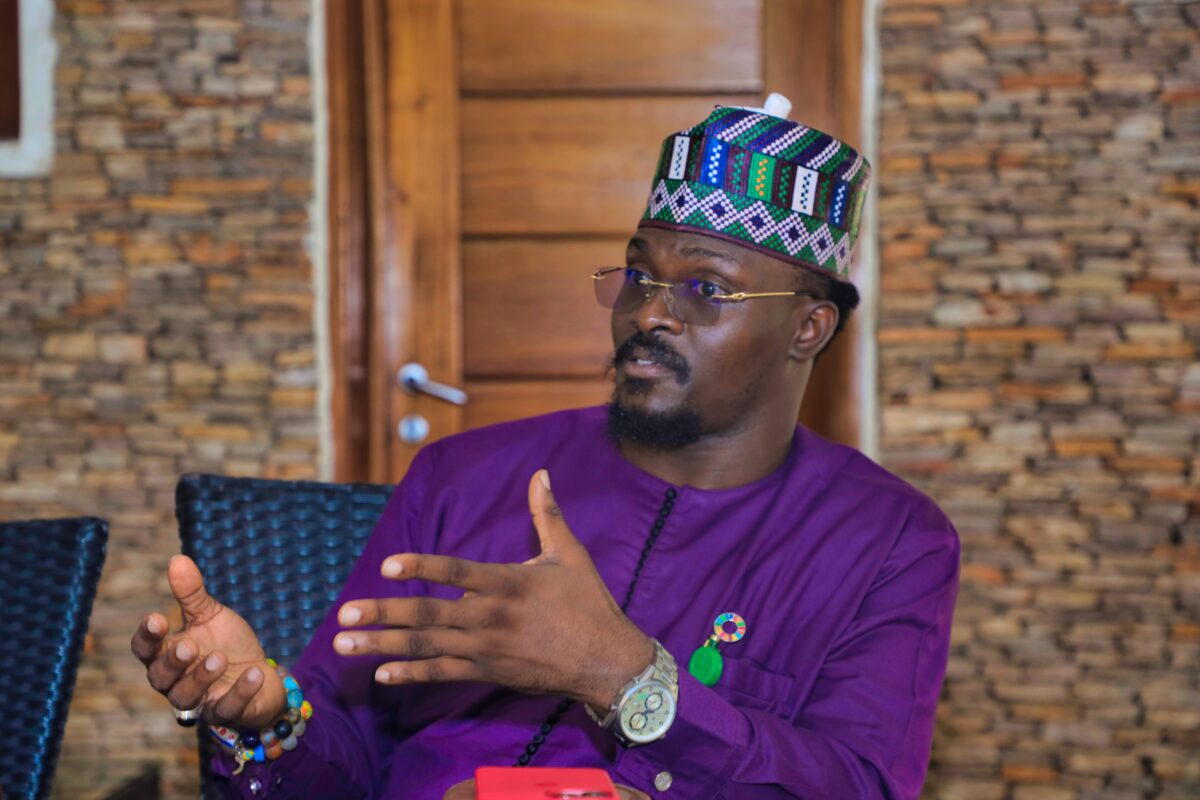
Dr Safiyyah Hassan Shaibu, 25th President of the Nigerian Army Officers’ Wives Association (NAOWA), brings six decades of grassroots presence into the UNESCO REF Strategic Intervention Programmes for Accelerated Learning and Productive Human Asset (SIP-ALPHA), aligned with the 2030 Agenda and the African Union’s Agenda 2063.

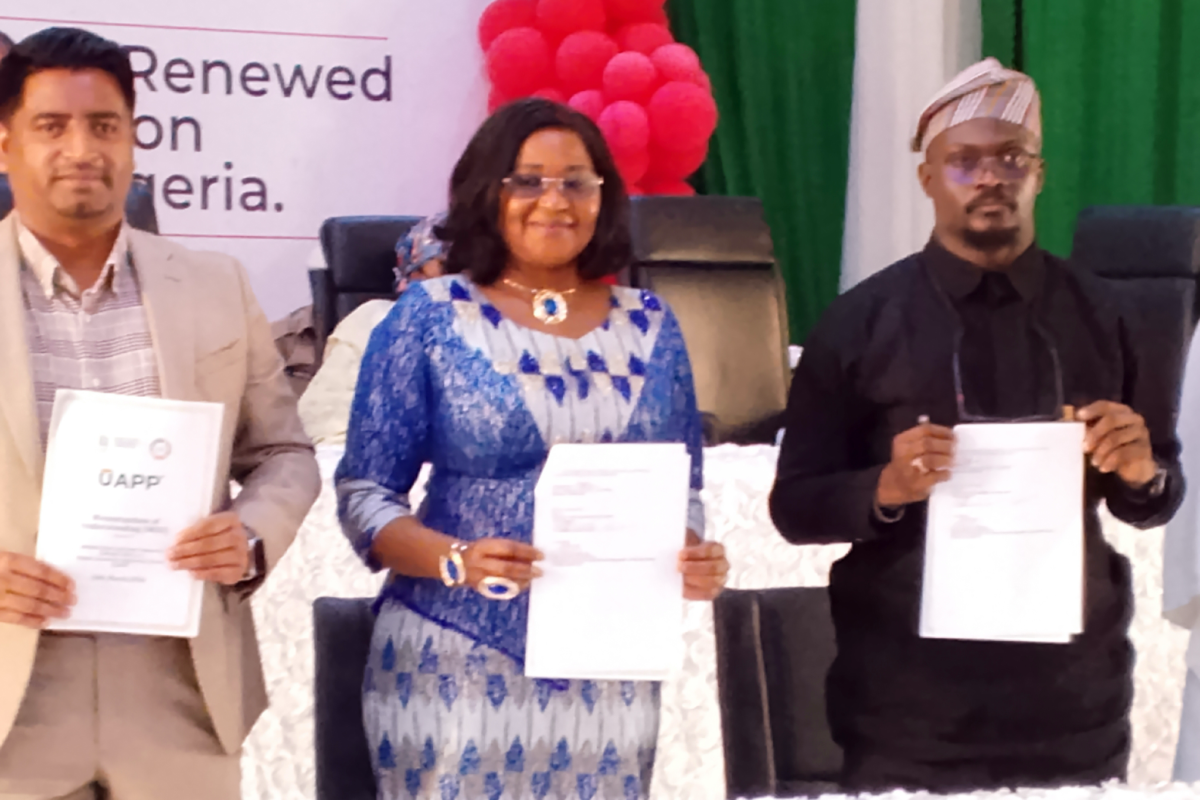
ABUJA, Nigeria, 14 August 2026. The Read and Earn Federation for UNESCO (UNESCO REF) announces that Dr Safiyyah Hassan Shaibu, 25th President of the Nigerian Army Officers’ Wives Association (NAOWA) and wife of the Chief of Army Staff, Lieutenant General Waidi Shaibu, has formally accepted her nomination as Strategic Ambassador for the UNESCO REF Strategic Intervention Programmes for Accelerated Learning and Productive Human Asset (SIP-ALPHA) in Nigeria.

Global alignmentAlignement mondialThe global commitments this story advances. Open to see how.
  • SDG1

    SDG 1, No Poverty

    ProvisionTarget 1.4: equal rights to economic resources for the poor and vulnerable

    How the appointment respondsExtends SIP-ALPHA into military communities and garrison towns

  • SDG2

    SDG 2, Zero Hunger

    ProvisionTarget 2.3: double the productivity and incomes of small-scale food producers, in particular women

    How the appointment respondsLeads the Young Women in Agriculture campaign for 12 million women

  • SDG4

    SDG 4, Quality Education

    ProvisionTargets 4.1 and 4.4: quality schooling and relevant skills for youth

    How the appointment respondsBuilds on NAOWA schools, teacher training and youth skills programmes

  • SDG5

    SDG 5, Gender Equality

    ProvisionTarget 5.5: women’s full participation and leadership

    How the appointment respondsPlaces women’s leadership at the head of national programme delivery

  • SDG8

    SDG 8, Decent Work

    ProvisionTarget 8.6: reduce youth not in employment, education or training

    How the appointment respondsYouth advancement and skills acquisition across the Federation

  • SDG17

    SDG 17, Partnerships

    ProvisionTarget 17.17: effective public and civil society partnerships

    How the appointment respondsA covenant between UNESCO REF and NAOWA

  • UNSC

    UN Security Council Resolution 1325

    ProvisionWomen, Peace and Security: women’s role in peacebuilding and community resilience

    How the appointment respondsMobilises the wives and families of the military as agents of development and stability

  • AU

    African Union Agenda 2063

    ProvisionAspiration 6: development driven by the potential of African women and youth

    How the appointment respondsCited by Dr Shaibu in her letter of acceptance

  • MP

    Maputo Protocol

    ProvisionArticle 15: right to food security; Article 13: economic and social welfare rights

    How the appointment respondsWomen-led food security and economic empowerment

  • NG

    Renewed Hope Agenda, Federal Government of Nigeria

    ProvisionFood security, human capital and inclusive growth

    How the appointment respondsDelivery through all 774 local government areas

The acceptance was conveyed by official correspondence dated 28 July 2026, under NAOWA reference NAOWA/NAT/G1/300/63. It is a considered institutional decision, taken, in Dr Shaibu’s own words, after having “carefully considered the objectives, scope and strategic vision of the SIP-ALPHA Initiative.”

The woman behind the mandate

La femme derrière le mandat

At her first Executive Meeting as 25th President of NAOWA, held in Abuja in February 2026, Dr Shaibu set out the principle that has guided her tenure: “When a woman is empowered, a family is strengthened; when families are stable, the military community is stronger.” She reminded members that the association was built on service and sacrifice, and that its decisions would affect thousands of families across formations and commands nationwide.

Her record since then reflects that conviction. Under her leadership, NAOWA has inaugurated new schools in Zaria, Badagry and at Bola Ahmed Tinubu Barracks in Abuja, begun construction of primary and secondary schools at Bola Ahmed Tinubu Barracks, and organised the 2026 NAOWA 21st Century Teacher Transformation Training. Its Youth Empowerment Project has trained 394 young people in ICT and fashion design, and more than 15,000 relief packages have reached members, widows and places of worship.

The institution she leads

L’institution qu’elle dirige

NAOWA began in the 1950s as the Army Wives Association and took its present name in 1963. For more than six decades it has operated community health centres, schools, day-care centres, skills acquisition and vocational centres and the Girl Child Education Programme, across a network that follows the Nigerian Army into garrison towns throughout the Federation.

It reaches communities where institutional presence is often thin, and it does so as a non-governmental organisation that receives no subvention from federal or state government. Scholars of Nigerian civil society have described it as the most powerful women’s organisation in the country.

The home front and the national mandate

Le front intérieur et le mandat national

Lieutenant General Waidi Shaibu was appointed Chief of Army Staff by President Bola Ahmed Tinubu on 30 October 2025. A field commander whose career spans counter-insurgency operations in the North East, he received the Service and Sacrifice Award at the 2026 Armed Forces Celebration and Remembrance Day ceremony at the State House, Abuja.

Behind every theatre of operations is a home front, and behind every soldier is a family sustained by sacrifice. Dr Shaibu has lived that reality. Her decision to commit NAOWA’s network to a development framework aligned with the United Nations agenda carries the lived experience of military families across the Federation.

A convergence of two institutions

La convergence de deux institutions

The road to the appointment began on 18 May 2026, when the President of UNESCO REF, Prince Abdulsalami Ladigbolu-Oranmiyan, held a high-level consultative engagement with Dr Shaibu at NAOWA headquarters in Abuja. The meeting examined institutional pathways for advancing the United Nations Sustainable Development Goals in Nigeria through the SIP-ALPHA framework.

Two institutions met. One brought seventeen years of experience in multi-sectoral development across the Federation. The other brought six decades of grassroots presence and community trust earned through consistent service. Each recognised in the other what neither possessed alone. On 28 July 2026, the conversation became a formal institutional covenant.

In her own words

Dans ses propres mots

“Having carefully considered the objectives, scope and strategic vision of the SIP-ALPHA Initiative, particularly its alignment with the United Nations Sustainable Development Goals and the African Union Agenda 2063, I further recognise its strong emphasis on sustainable development, food security, education, youth advancement, health resilience and community empowerment. It is therefore with great pleasure that I formally accept this nomination and appointment as Strategic Ambassador for SIP-ALPHA.

I look forward to collaborating closely with UNESCO REF, development partners and other relevant stakeholders in achieving the objectives of SIP-ALPHA for the benefit of our nation and future generations.”

Dr Safiyyah Hassan Shaibu, 25th President, Nigerian Army Officers’ Wives Association, Abuja, 28 July 2026

The UNESCO REF President responds

La réponse du Président de l’UNESCO REF

“Dr Safiyyah Hassan Shaibu’s formal acceptance of this nomination is one of the most consequential institutional developments in UNESCO REF’s seventeen-year history. NAOWA does not lend its name; it lends its capacity, its networks and its communities. As Strategic Ambassador for SIP-ALPHA, she brings to our framework the institutional discipline of an organisation forged in service, the grassroots reach of a network that no programme map can fully capture, and the moral authority of women’s leadership at its most credible.

Nigeria’s development cannot be delivered from Abuja alone. It must be assembled, community by community, in every barracks, every garrison town and every local government area of this Federation. That assembly now has a new and formidable architect.”

Prince Abdulsalami Ladigbolu-Oranmiyan, President, UNESCO REF

What the appointment means

La portée de la nomination

SIP-ALPHA is UNESCO REF’s most ambitious institutional architecture: a governance innovation that moves development delivery from siloed programmes to an integrated, systems-based approach across education, agriculture, health resilience, youth empowerment and sustainable community development.

As Strategic Ambassador, Dr Shaibu brings NAOWA’s national footprint into SIP-ALPHA’s implementation architecture, with the aim of accelerating delivery across all 774 local government areas of the Federation. Her mandate already extends to two flagship programmes:

  • Young Women in Agriculture (YWA). A national mobilisation campaign targeting 12 million young women in agriculture (read more). Food security is a pressing national priority: the Cadre Harmonisé analysis projected that about 34.7 million Nigerians would face food insecurity in the June to August 2026 lean season.
  • The VOICE Initiative. UNESCO REF’s professional advancement programme for women with disabilities, launched on 1 October 2026 with the Osun State Government as first pilot state. Dr Shaibu will lead its national upscaling to 120,000 women across the six geopolitical zones and its extension across Africa (read more).

The contribution to the Sustainable Development Goals is direct. The deeper contribution is the trust of a nation’s military families, now extended into the architecture of its development future.

ENDS

Notes to editorsNotes aux rédactions

About SIP-ALPHA. The Strategic Intervention Programmes for Accelerated Learning and Productive Human Asset (SIP-ALPHA) is UNESCO REF’s integrated development framework, delivering education, agriculture, health resilience, youth empowerment and community development programmes in alignment with the 2030 Agenda for Sustainable Development and the African Union’s Agenda 2063.

About NAOWA. The Nigerian Army Officers’ Wives Association is a non-profit, non-governmental organisation founded in the 1950s and constituted under its present name in 1963. It operates schools, community health centres, skills acquisition centres and welfare programmes for military families and host communities across Nigeria.

About UNESCO REF. The Read and Earn Federation for UNESCO (UNESCO REF) works to strengthen human and institutional capacity across Nigeria and Africa through education, research and professional development.

Media enquiries. UNESCO REF Media Centre, info@unescoref.org

Ref: UNESCO REF/MEDIA/2026/NAOWA SIP ALPHA AMB 01

SourcesSources

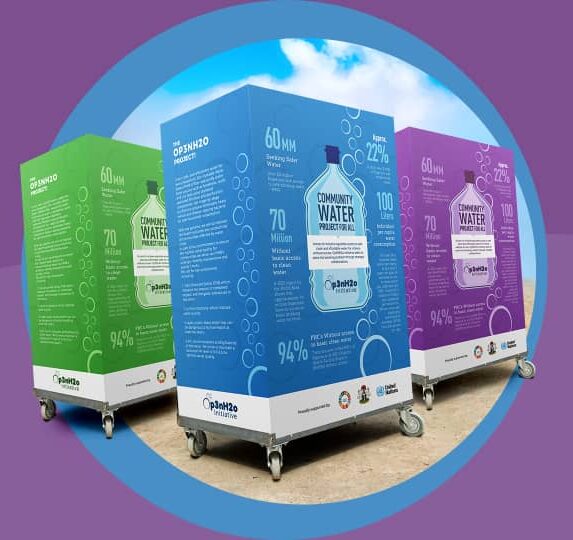
UNESCO REF Pilots Modular Water Purification in Nigeria

UNESCO REF, Nigerian Diaspora and US Technology Partner Pilot Modular Water Purification System under SIP-ALPHA Category 11

The DispatchUNESCO REF Media Centre · EISSN 3156-55575 min read

UNESCO REF Media Centre | SIP-ALPHA Category 11

A solar-hybrid, modular purification system inaugurated at the NYSC Federal Capital Territory site is the first validation site of a national framework for safe drinking water, local skills and Nigerian-owned infrastructure.

ABUJA, Nigeria, 6 July 2026. In a development that places Nigerian ingenuity and diaspora expertise at the service of public health, the Read and Earn Federation for UNESCO (UNESCO REF) has inaugurated a modular water purification system developed in partnership with Nigerian professionals in the diaspora and a technology company based in the United States. Implemented under Category 11 of the UNESCO REF Strategic Intervention Programmes for Accelerated Learning and Productive Human Asset (SIP-ALPHA), the system is now undergoing operational and public health validation as the first site of a national framework for safe drinking water.

Global alignmentAlignement mondialThe global commitments this story advances. Open to see how.
  • SDG6

    SDG 6, Clean Water and Sanitation (primary)

    ProvisionTarget 6.1: universal and equitable access to safe and affordable drinking water

    How the pilot respondsModular purification at community water points, schools and health centres

  • SDG3

    SDG 3, Good Health and Well-being

    ProvisionTarget 3.3: combat water-borne diseases; Target 3.9: reduce illness from water contamination

    How the pilot respondsTargets cholera, typhoid, hepatitis A and diarrhoeal disease

  • SDG9

    SDG 9, Industry, Innovation and Infrastructure

    ProvisionTarget 9.1: resilient infrastructure; Target 9.5: technological capability

    How the pilot respondsLocally maintained, solar-hybrid infrastructure

  • SDG8

    SDG 8, Decent Work

    ProvisionTarget 8.6: youth employment and training

    How the pilot respondsApprenticeships and local enterprise in assembly and spare parts

  • SDG7

    SDG 7, Affordable and Clean Energy

    ProvisionTarget 7.2: increase the share of renewable energy

    How the pilot respondsSolar-hybrid power

  • SDG17

    SDG 17, Partnerships

    ProvisionTarget 17.6: technology cooperation; Target 17.17: partnerships

    How the pilot respondsDiaspora, United States partner, government and evaluators in one governance structure

  • AU

    African Union Agenda 2063

    ProvisionAspiration 1: a prosperous Africa with access to safe water

    How the pilot respondsNigerian-owned water infrastructure

The initiative rests on a conviction that has guided UNESCO REF since its establishment: that durable development is built, not donated. Rather than importing finished solutions, the programme combines international technology with Nigerian skills, Nigerian supply chains and Nigerian ownership, so that every installation strengthens national capability as well as public health.

A public health imperative

Un impératif de santé publique

Access to safe drinking water remains one of the defining development challenges of our time. According to the World Health Organization and UNICEF, one in four people worldwide, some 2.1 billion, still lacked safely managed drinking water in 2024, and 106 million drew their water directly from untreated surface sources. The burden falls most heavily on children, women and the poorest communities, for whom waterborne disease remains a leading and wholly preventable cause of illness and death.

For Nigeria, the stakes are both human and economic. Outbreaks of cholera, typhoid and diarrhoeal disease strain health systems, keep children out of school and erode household incomes. A reliable, locally maintained supply of safe water is therefore not a single-sector intervention but a foundation for progress in health, education and productivity alike.

Why the National Youth Service Corps

Pourquoi le Service national de la jeunesse

The pilot is sited at the National Youth Service Corps (NYSC) Federal Capital Territory site. The choice is deliberate. With a presence in all 36 States and the Federal Capital Territory, the NYSC offers a ready national architecture through which a validated model can be replicated at scale, while its camps bring together young graduates who can themselves become ambassadors of safe water practice in the communities they serve.

Engineered for Nigerian conditions

Conçu pour les réalités nigérianes

The system has been designed to perform reliably where grid power is intermittent and specialist support is distant. Its treatment chain and operating model are as follows:

  • Multi-stage treatment. Sediment and carbon pre-filtration, followed by ultrafiltration or reverse osmosis, UV-C disinfection and covered storage.
  • Energy resilience. Solar-hybrid power, reducing operating cost and dependence on the national grid.
  • Remote monitoring. Continuous oversight of performance and water quality.
  • Local maintainability. Locally sourced components, modular cartridges and field-repair protocols that reduce reliance on external suppliers.
  • Deployment settings. Community water points, NYSC orientation camps, schools and primary health centres.

Evidence, skills and accountability

Données probantes, compétences et redevabilité

The programme is committed to measurable outcomes. Its public health objectives include reductions in cholera, typhoid, hepatitis A and diarrhoeal disease, to be assessed through independent midline and endline evaluations. Results will be reported against recognised national and international standards before any claim of impact is made.

Equally central is the transfer of skills. A training curriculum developed with Nigerian technical institutes, supported by apprenticeships and local enterprise in assembly and spare parts, is intended to create a skilled workforce and a domestic supply chain that outlive the pilot itself.

Governance has been structured for transparency. A National Programme Office will operate under the oversight of an International Steering Committee comprising UNESCO REF, representatives of the Nigerian diaspora, the United States technology partner, relevant federal ministries and independent evaluators. Non-sensitive programme data will be published on public dashboards.

Voices of the partnership

Les voix du partenariat

“We are not delivering aid. We are building sovereign infrastructure.”

Prince Abdulsalami Ladigbolu-Oranmiyan, President, UNESCO REF

“It must build capability, never dependency.”

Jonathan David, Chief Executive Officer, United States technology partner

Taken together, the two statements capture the philosophy of the programme: international partnership in service of national self-reliance.

An open invitation

Une invitation ouverte

UNESCO REF invites federal and state ministries, technical institutes, United Nations agencies, development finance institutions, researchers, the private sector and civil society to join the national framework as host sites, curriculum partners, data partners, financiers or independent validators. Each additional partner extends the reach of safe water to communities that have waited too long for it.

ENDS

Notes to editorsNotes aux rédactions

About SIP-ALPHA. The Strategic Intervention Programmes for Accelerated Learning and Productive Human Asset (SIP-ALPHA) is UNESCO REF’s integrated development framework. Category 11 addresses water and public health infrastructure.

About UNESCO REF. The Read and Earn Federation for UNESCO (UNESCO REF) works to strengthen human and institutional capacity across Nigeria and Africa through education, research and professional development, in alignment with the 2030 Agenda for Sustainable Development.

Media enquiries. UNESCO REF Media Centre, info@unescoref.org

SourcesSources

UNESCO REF 2026 Call for Volunteers

UNESCO REF Call for Volunteers 2026: Join a Network of Change-Makers Shaping Nigeria’s Future

The DispatchUNESCO REF Media Centre · EISSN 3156-55573 min read

UNESCO REF Media Centre | Call for Volunteers

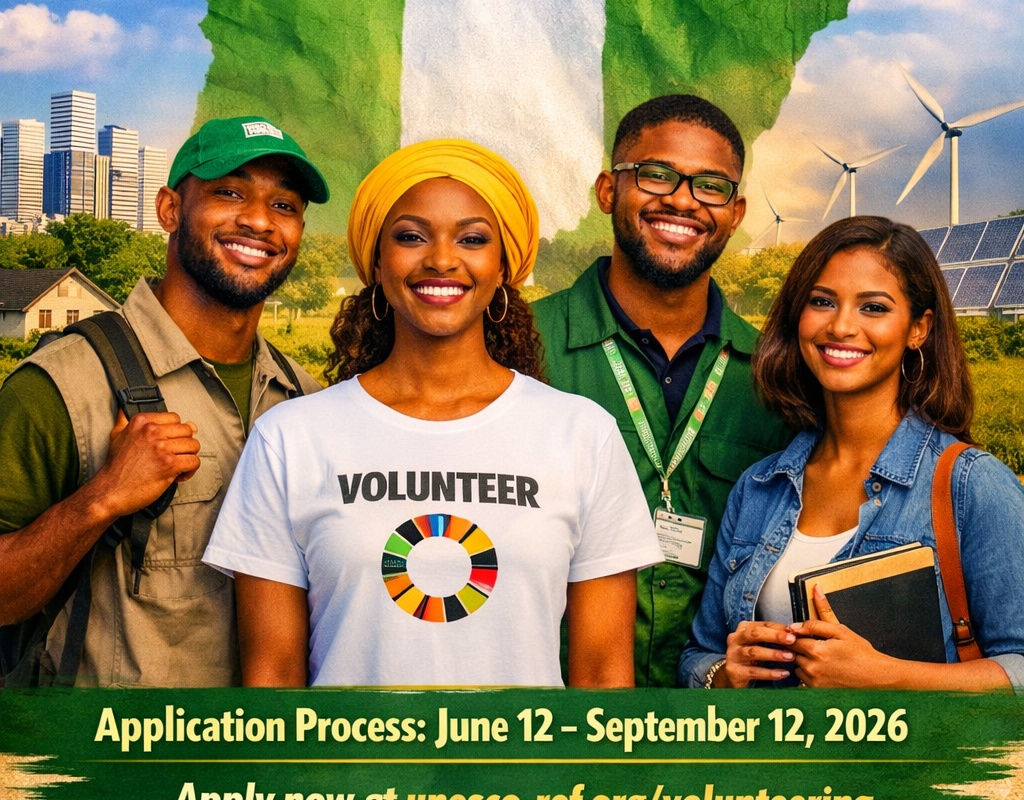
UNESCO REF invited qualified applicants worldwide to volunteer their expertise to its programmes, with remote roles available and selected assignments requiring presence in Nigeria.

This call is now closed. Applications ran from 12 June to 12 September 2026. Details of future calls will be published on the Volunteering page.

ABUJA, Nigeria, 12 June 2026. The Read and Earn Federation for UNESCO (UNESCO REF) has opened its 2026 Call for Volunteers, inviting accomplished professionals, scholars and emerging leaders from Nigeria, the diaspora and the wider international community to place their expertise at the service of the nation’s development. Successful applicants will join a distinguished network of change-makers contributing to education, agriculture, health, digital transformation and community development across the Federation.

Global alignmentAlignement mondialThe global commitments this story advances. Open to see how.
  • SDG17

    SDG 17, Partnerships (primary)

    ProvisionTarget 17.17: effective public, private and civil society partnerships

    How the call respondsBrings global expertise into Nigerian programmes

  • UNGA

    UN General Assembly resolution 70/129 (2015)

    ProvisionIntegrating volunteering into the 2030 Agenda

    How the call respondsStructured volunteer engagement aligned with the SDGs

  • SDG4

    SDG 4 and SDG 8

    ProvisionEducation, skills and decent work

    How the call respondsVolunteers support training and employment programmes

  • AU

    African Union Agenda 2063

    ProvisionAspiration 6: people-driven development

    How the call respondsEngages Africans at home and in the diaspora

Volunteerism has long been recognised by the United Nations as a powerful means of implementing the 2030 Agenda for Sustainable Development. In 2015, the United Nations General Assembly, by resolution 70/129, called for volunteering to be integrated into the planning and delivery of the Sustainable Development Goals. The UNESCO REF Call for Volunteers answers that call by connecting individual talent with institutional programmes that deliver measurable change in Nigerian communities.

The call at a glance

L’appel en bref

  • Application window. Opens 12 June 2026 and closes 12 September 2026.
  • Eligibility. Open to qualified applicants worldwide, regardless of nationality.
  • Modes of service. Remote options are available for selected roles; certain assignments require physical presence in Nigeria.
  • How to apply. Review the volunteering process on the Volunteering page and register through the application portal.

Where volunteers serve

Domaines d’engagement

Volunteers are deployed across UNESCO REF’s flagship programmes, among them Young Women in Agriculture, which is mobilising 12 million young women for food security; The VOICE Initiative, which prepares women with disabilities for employment in the digital economy; the Educational Financial Facility Scheme, which opens accredited international education to young Nigerians; and the ARDAI TIER I programme in artificial intelligence.

Roles span programme coordination, research and evaluation, curriculum and training, communications, partnerships and community mobilisation. Each assignment is designed to make use of the volunteer’s professional expertise and to leave a lasting contribution.

Why it matters

Les enjeux

Nigeria’s development challenges are matched by an extraordinary reservoir of talent, at home and in its global diaspora. Structured volunteering allows that talent to be mobilised quickly and purposefully, bringing specialist knowledge to communities and strengthening the institutions that serve them. For volunteers, it offers the opportunity to contribute to nationally significant programmes aligned with the Sustainable Development Goals.

ENDS

Notes to editorsNotes aux rédactions

About UNESCO REF. The Read and Earn Federation for UNESCO (UNESCO REF) works to strengthen human and institutional capacity across Nigeria and Africa through education, research and professional development, in alignment with the 2030 Agenda for Sustainable Development.

Media enquiries. UNESCO REF Media Centre, info@unescoref.org

SourcesSources

Child Labour in Nigeria: A Pipeline to Terrorism

Child Labour: Nigeria’s Forgotten Pipeline to Terrorism

The DispatchUNESCO REF Media Centre · EISSN 3156-55576 min read

UNESCO REF Media Centre | Opinion

Nearly 25 million Nigerian children are in child labour. Every one of them is a child diverted from the classroom, and some will be diverted into conflict. Protecting them is not only a moral duty. It is a matter of national security.

Democracy Day and a sobering reality

La Journée de la Démocratie face à une réalité préoccupante

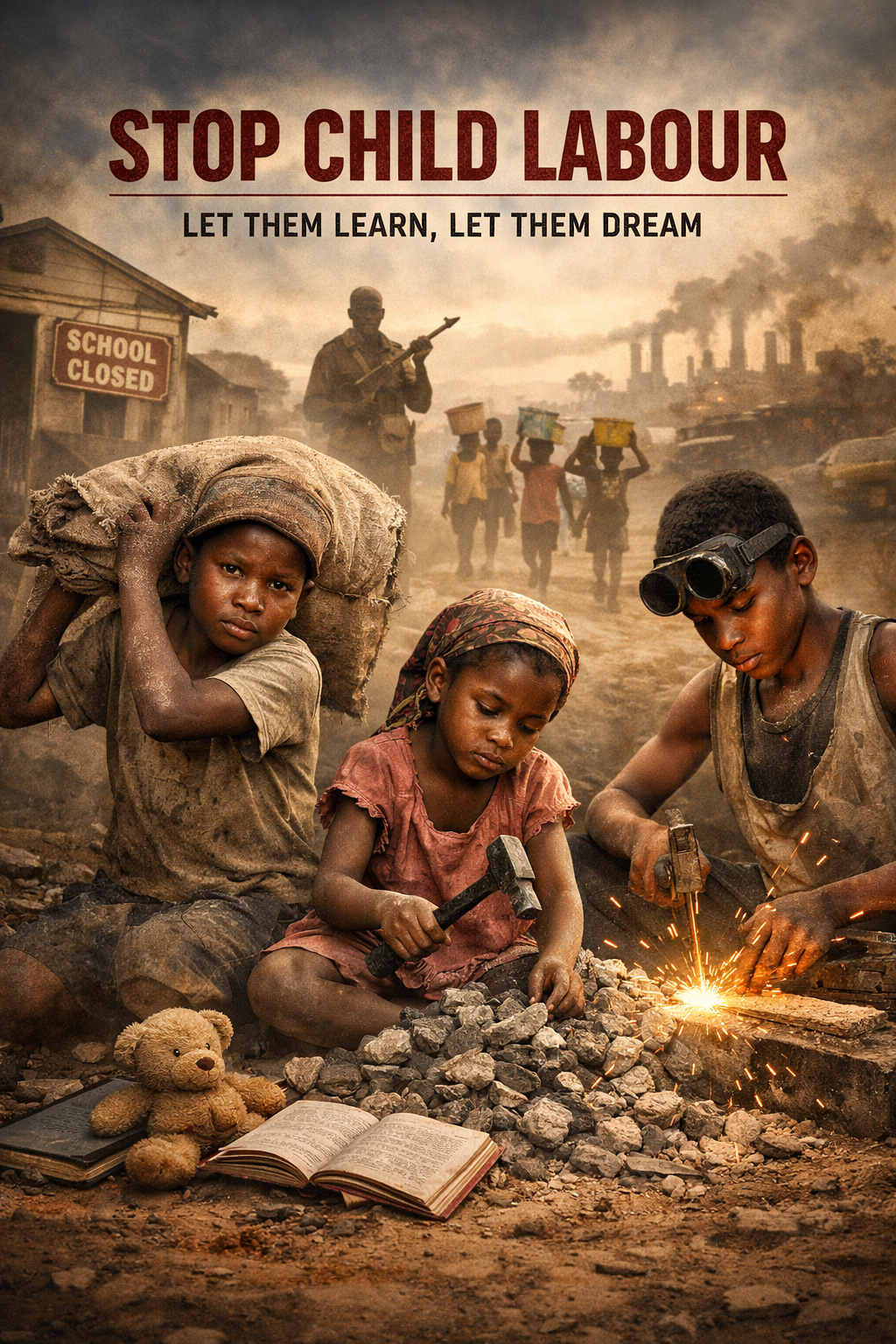
Campaign illustration titled Stop Child Labour, Let Them Learn, Let Them Dream, showing children carrying heavy loads, breaking stones and welding beside a closed school
UNESCO REF CampaignStop Child Labour. Let them learn, let them dream.Campaign artwork for the World Day Against Child Labour. Each child pictured at work is a child absent from a classroom, and a future the nation cannot afford to lose.

Nigeria marks Democracy Day on the same date the world observes the World Day Against Child Labour. The coincidence should prompt reflection. Child labour is not merely an economic or social problem. It is a national security crisis.

Global alignmentAlignement mondialThe global commitments this story advances. Open to see how.
  • SDG8

    SDG 8, Decent Work (primary)

    ProvisionTarget 8.7: end child labour in all its forms by 2025, including the recruitment and use of child soldiers

    What it demands of NigeriaRecover lost ground on a deadline the world has missed

  • SDG4

    SDG 4, Quality Education

    ProvisionTarget 4.1: free, equitable and quality primary and secondary education for all

    What it demands of NigeriaReturn out-of-school children to learning

  • SDG16

    SDG 16, Peace, Justice and Strong Institutions

    ProvisionTarget 16.2: end abuse, exploitation and all forms of violence against children

    What it demands of NigeriaIntegrate child protection into security strategy

  • SDG1

    SDG 1 and SDG 17

    ProvisionSocial protection systems; multi-stakeholder partnerships

    What it demands of NigeriaSafety nets for vulnerable families, and partnership with the international community

  • CRC

    UN Convention on the Rights of the Child

    ProvisionArticle 32: protection from economic exploitation; Article 38: protection in armed conflict

    What it demands of NigeriaEnforce both protections together

  • CRC

    Optional Protocol on the involvement of children in armed conflict

    ProvisionProhibits the recruitment and use of children in hostilities

    What it demands of NigeriaClose the recruitment pipeline

  • ILO

    ILO Conventions 138 and 182

    ProvisionMinimum age for employment; elimination of the worst forms of child labour

    What it demands of NigeriaEnforce the conventions Nigeria has ratified

  • AU

    African Charter on the Rights and Welfare of the Child

    ProvisionArticle 15: child labour; Article 22: armed conflicts

    What it demands of NigeriaRegional accountability for both

  • DCA

    Durban Call to Action, 2022

    ProvisionGlobal commitments from the 5th Global Conference on the Elimination of Child Labour

    What it demands of NigeriaAccelerate action after the missed 2025 target

  • NG

    Child’s Rights Act, 2003 (Nigeria)

    ProvisionDomestic protection of children from exploitative labour

    What it demands of NigeriaFull adoption and enforcement in every State

Children forced into labour, hawking on our streets, working in unsafe mines or performing hazardous tasks, are denied education and hope. Extremist groups exploit that vulnerability and turn poverty into a recruitment pipeline. Every child lost to labour is a child diverted from the classroom towards conflict, from innovation towards insurgency.

The scale of the crisis

L’ampleur de la crise

The figures leave no room for complacency. According to the National Bureau of Statistics, 24.7 million Nigerian children aged 5 to 17, or 39.2 per cent of that age group, were in child labour in 2022. More than 14.3 million of them were engaged in hazardous work.

MeasureNigeriaWorld
Children in child labour24.7 million (39.2% of children aged 5 to 17, 2022)Nearly 138 million (2024)
Children in hazardous work14.4 million (22.9%, 2022)Around 54 million (2024)
Regional shareNigeria is part of sub-Saharan AfricaAround 87 million, nearly two-thirds of the global total, are in sub-Saharan Africa
Out-of-school children and youthAbout 20 million

The world has also missed its own deadline. Target 8.7 of the Sustainable Development Goals committed every nation to end child labour in all its forms by 2025. The International Labour Organization and UNICEF confirmed in June 2025 that the target was not met.

From labour to recruitment

Du travail au recrutement

The link between deprivation and violence is not speculation. UNICEF reported in 2022 that more than 8,000 girls and boys had been recruited and used by armed groups in north-east Nigeria since 2009. A 2023 UNDP study of violent extremism in sub-Saharan Africa found that about a quarter of voluntary recruits cited job opportunities as the main reason for joining.

A child who is out of school and working for survival is the child most exposed to that offer. Child labour and terrorist recruitment draw on the same conditions: poverty, exclusion and the absence of hope. They must be confronted together.

Nigeria’s greatest resource at risk

La plus grande ressource du Nigéria en péril

Nigeria’s greatest resource is not oil or minerals. It is its people. Child labour steadily erodes that foundation, diminishing the nation’s intellectual capital and weakening its capacity to compete in a knowledge-driven world. Protecting children today is therefore not only a moral duty but a strategic imperative for Nigeria’s survival and growth.

Democracy is built on participation, inclusion and opportunity. Child labour undermines each of these principles by silencing millions of voices before they can be heard. A democracy that fails to protect its children is a democracy at risk.

Linking the fight to global commitments

Une lutte inscrite dans les engagements mondiaux

Nigeria has already bound itself, in law and in international undertakings, to end child labour and to protect children from armed conflict. What is required now is implementation.

A call to leadership and partnership

Un appel au leadership et au partenariat

At this critical juncture, I call upon His Excellency, President Bola Ahmed Tinubu, to bring fresh, integrated thinking to bear on this crisis by synchronising the work of three ministries: the Federal Ministry of Art, Culture, Tourism and the Creative Economy; the Federal Ministry of Information and National Orientation; and the Federal Ministry of Humanitarian Affairs and Poverty Reduction. The instruments for a solution already lie within their mandates. Cultural renewal, public information and humanitarian outreach must work as one strategy rather than three.

This work must be entrusted to thinkers and specialists with the depth and the time to design durable strategy, and not left solely to administrators absorbed by the demands of daily operations. It must also be strengthened by cooperation between the Global North and the Global South, in recognition that child labour and terrorism are shared challenges that require shared solutions. Nigeria’s call is not for charity but for partnership: a partnership that secures democracy and safeguards humanity.

Nigeria cannot confront this challenge alone. United Nations agencies, donor bodies and international partners must join hands with Nigeria to eradicate child labour and dismantle the recruitment pipelines of terror. That partnership must deliver:

  • Investment in education. Schools built, teachers trained and quality learning within reach of every child.
  • Social protection. Safety nets for the families most vulnerable to child labour.
  • Child-centred security. Counter-terrorism strategies that integrate child protection into national and regional security frameworks.
  • Community resilience. Programmes that equip local leaders and families to resist extremist recruitment.

The eradication of child labour is not a distant goal; it is an urgent necessity. Nigeria must strengthen its laws, enforce accountability and treat education as a national security strategy. International partners must provide technical expertise, funding and solidarity. Civil society must continue to raise awareness and hold leaders to account. Government, the private sector, civil society and international organisations must work hand in hand. The stakes are too high for complacency.

The measure of our humanity

La mesure de notre humanité

On this Democracy Day, let us affirm that democracy is measured not by ballots alone, but by the futures we safeguard for our children. The fight against child labour is inseparable from the fight against terrorism. By protecting Nigeria’s children, we protect Nigeria’s democracy and, by extension, the stability of Africa and the world.

The time to act is now. The world must not look away. Nigeria’s children deserve more than survival; they deserve the chance to thrive, to innovate and to lead. The measure of our collective humanity will be judged by how we respond to this crisis.

Notes to editorsNotes aux rédactions

About the author. Prince Abdulsalami Ladigbolu-Oranmiyan is President of the Read and Earn Federation for UNESCO (UNESCO REF) and a Senior Fellow of the Association of Business Executives, United Kingdom. Read his profile.

SourcesSources

EFFS and NELFUND: Global Higher Education for Nigerians

EFFS: Complementing NELFUND to Open Global Higher Education to Young Nigerians

The DispatchUNESCO REF Media Centre · EISSN 3156-55576 min read

UNESCO REF Media Centre | Education Financing

The UNESCO REF Educational Financial Facility Scheme (EFFS) extends the reach of Nigeria’s national student loan system to accredited international programmes, with a first-phase target of 60,000 young beneficiaries, at least half of them young women.

ABUJA, Nigeria, 18 February 2026. The Educational Financial Facility Scheme (EFFS), a flagship initiative of the Read and Earn Federation for UNESCO (UNESCO REF), under the leadership of its President, Prince Abdulsalami Ladigbolu-Oranmiyan, is designed to complement the Federal Government’s Nigerian Education Loan Fund (NELFUND). The scheme expands access to accredited international higher education, strengthens Nigeria’s human capital, and aligns with the African Union’s Agenda 2063 and the United Nations Sustainable Development Goals.

Global alignmentAlignement mondialThe global commitments this story advances. Open to see how.
  • SDG4

    SDG 4, Quality Education (primary)

    ProvisionTarget 4.3: equal access to affordable, quality tertiary education; Target 4.b: expand scholarships for developing countries

    How EFFS respondsTuition scholarships and loans for accredited higher education

  • SDG5

    SDG 5, Gender Equality

    ProvisionTarget 5.5 and equal access to opportunity

    How EFFS respondsMinimum 50 per cent participation by young women

  • SDG8

    SDG 8, Decent Work

    ProvisionTarget 8.6: reduce youth not in employment, education or training

    How EFFS respondsPre-departure employability and entrepreneurship training

  • SDG9

    SDG 9, Industry, Innovation and Infrastructure

    ProvisionTarget 9.5: enhance research and innovation capacity

    How EFFS respondsSkilled graduates for national innovation ecosystems

  • SDG10

    SDG 10, Reduced Inequalities

    ProvisionTarget 10.2: economic and social inclusion of all

    How EFFS respondsRemoves financial and administrative barriers to education

  • SDG17

    SDG 17, Partnerships

    ProvisionTarget 17.17: public, private and civil society partnerships

    How EFFS respondsMulti-stakeholder governance across UNESCO REF, Lichfield, UAPP and financial partners

  • UNESCO

    UNESCO Education 2030 Framework for Action

    ProvisionInclusive, equitable quality education and lifelong learning for all

    How EFFS respondsImplementation phase aligned with the Framework

  • WBHC

    World Bank Human Capital Project

    ProvisionInvestment in people as the basis of growth

    How EFFS respondsDirectly addresses Nigeria’s human capital gap

  • AU

    African Union Agenda 2063

    ProvisionAspiration 6: development driven by the potential of African people, especially youth

    How EFFS respondsContinental scaling phase

  • CESA

    Continental Education Strategy for Africa (CESA)

    ProvisionExpanded, quality tertiary education and skills for Africa

    How EFFS respondsPositions Nigerian graduates for continental leadership

  • NG

    Student Loans (Access to Higher Education) Act, 2024 (Nigeria)

    ProvisionNational framework for student loans through NELFUND

    How EFFS respondsEFFS complements, rather than duplicates, the national scheme

NELFUND, established under the Student Loans (Access to Higher Education) Act, 2024, had disbursed N242.4 billion to more than 1.38 million students across 288 Nigerian tertiary institutions by April 2026. EFFS builds on that national foundation by opening a structured, governed pathway to accredited international credentials, so that no talented Nigerian is held back by financial barriers.

Commissioned on 18 February 2026, the scheme has already supported more than 6,850 beneficiaries across professional, undergraduate, Master’s and doctoral programmes. The Global University Application Portal (UAPP) participates as a strategic partner, and the scheme remains open to other credible institutions and stakeholders.

WatchNTA Network report: “Nigeria, UNESCO Sign MOU with UK Platform to Boost Overseas Studies”Watch on YouTube

Why it matters

Les enjeux

Demand for international education among young Nigerians has never been higher. UNESCO data show the number of Nigerian students abroad nearly doubled, from 71,753 in 2020 to about 142,000 in 2023, across 21 major study destinations. For most families, cost remains the decisive barrier.

The stakes are national. Nigeria scored 0.36 on the World Bank’s Human Capital Index in 2020, meaning a child born in Nigeria could expect to reach only about a third of their full productive potential by age 18. Structured, accountable financing for higher education is one of the most direct levers for closing that gap.

Voices of commitment

Des voix engagées

“The EFFS is more than financing. It is a national, continental and global commitment to ensure that no talented Nigerian is denied the opportunity to earn accredited international credentials because of financial barriers. By complementing NELFUND, we are embedding transparency, accountability and equity into education financing. This is Nigeria’s gift to Africa, and Africa’s contribution to the world.”

Prince Abdulsalami Ladigbolu-Oranmiyan, President, UNESCO REF

“Our youth are the custodians of Nigeria’s future. The EFFS ensures that their aspirations are matched with structured support, ethical governance and global opportunity. It is a flagship programme that strengthens families’ confidence and positions Nigeria as a leader in human capital development.”

Dr Mrs Elizabeth Egbetokun, National President, Police Officers’ Wives Association (POWA), at the time of the scheme’s commissioning

“Through our participation in the EFFS, we are connecting Nigerian students to world-class universities with a transparent and credible admissions process. This collaboration ensures that ambition is matched with opportunity, and that financing is responsibly structured under UNESCO REF’s governance. It is a model of how global collaboration can empower Africa’s next generation.”

Mr Md Shamim, Chief Executive Officer, Global University Application Portal (UAPP)

How the scheme works

Le fonctionnement du dispositif

EFFS supports tuition through two routes. Online study is supported by a tuition scholarship of 86 per cent, or 75 per cent for Professional Programmes. In-person study abroad is supported by a tuition loan. Both routes cover tuition only.

PartnerRole
UNESCO REFStrategic oversight, governance and beneficiary protection
UNESCO REF Chartered Institute, LichfieldAdministrative hub: compliance, enquiries and pre-departure employability training
Global University Application Portal (UAPP)Admissions facilitation with world-class universities
UAPP private financial partners and consultantsLoan products and advisory services under UNESCO REF’s governance framework
Other credible institutions and stakeholdersInvited to engage and partake, broadening collaboration and impact

Implementation proceeds in four phases:

  1. Pilot phase. Initial implementation in Police Schools in Nigeria.
  2. National rollout. Phased expansion across Nigeria, aligned with NELFUND.
  3. Continental scaling. Integration into the African Union’s Agenda 2063 youth empowerment frameworks.
  4. Global partnerships. Alignment with UNESCO’s Education 2030 agenda and the World Bank’s Human Capital Project.

The scheme commits to five impact measures:

  • Access. 60,000 youth beneficiaries in the first phase.
  • Equity. A minimum of 50 per cent participation by young women.
  • Employability. Pre-departure modules linked to job readiness and entrepreneurship.
  • Accountability. Independent audits, grievance mechanisms and transparent reporting.
  • Sustainability. Integration with national and continental financing frameworks.

A governed model for education financing

Un modèle de financement de l’éducation fondé sur la gouvernance

The EFFS is a professionally governed, student-centred response to the needs of Nigerian families seeking international education. It complements NELFUND, advances Agenda 2063 and contributes to the Sustainable Development Goals. With UNESCO REF providing oversight, Lichfield managing administration and pre-departure training, UAPP participating as a strategic partner and private partners supplying loan products, the scheme offers a model for equitable, transparent and sustainable education financing.

Applicants, families and prospective partners can learn more at effs.unesco-ref.org. The UNESCO REF Chartered Institute, Lichfield, is the official administrative contact point for enquiries and programme information.

The Official EFFS Portal
Eligibility, partner institutions, the application procedure and programme guidance are set out in full on the official website of the Educational Financial Facility Scheme.
Visit effs.unesco-ref.org →
Consulter le portail officiel de l’EFFS

ENDS

Notes to editorsNotes aux rédactions

About the EFFS. The Educational Financial Facility Scheme is the mechanism through which UNESCO REF works with investors, donors and corporate partners to sponsor programmes and negotiate scholarships and fee reductions. Its education component complements the Federal Government’s Nigerian Education Loan Fund.

About UNESCO REF. The Read and Earn Federation for UNESCO (UNESCO REF) works to strengthen human and institutional capacity across Nigeria and Africa through education, research and professional development, in alignment with the 2030 Agenda for Sustainable Development.

Media enquiries. UNESCO REF Media Centre, info@unescoref.org

SourcesSources