
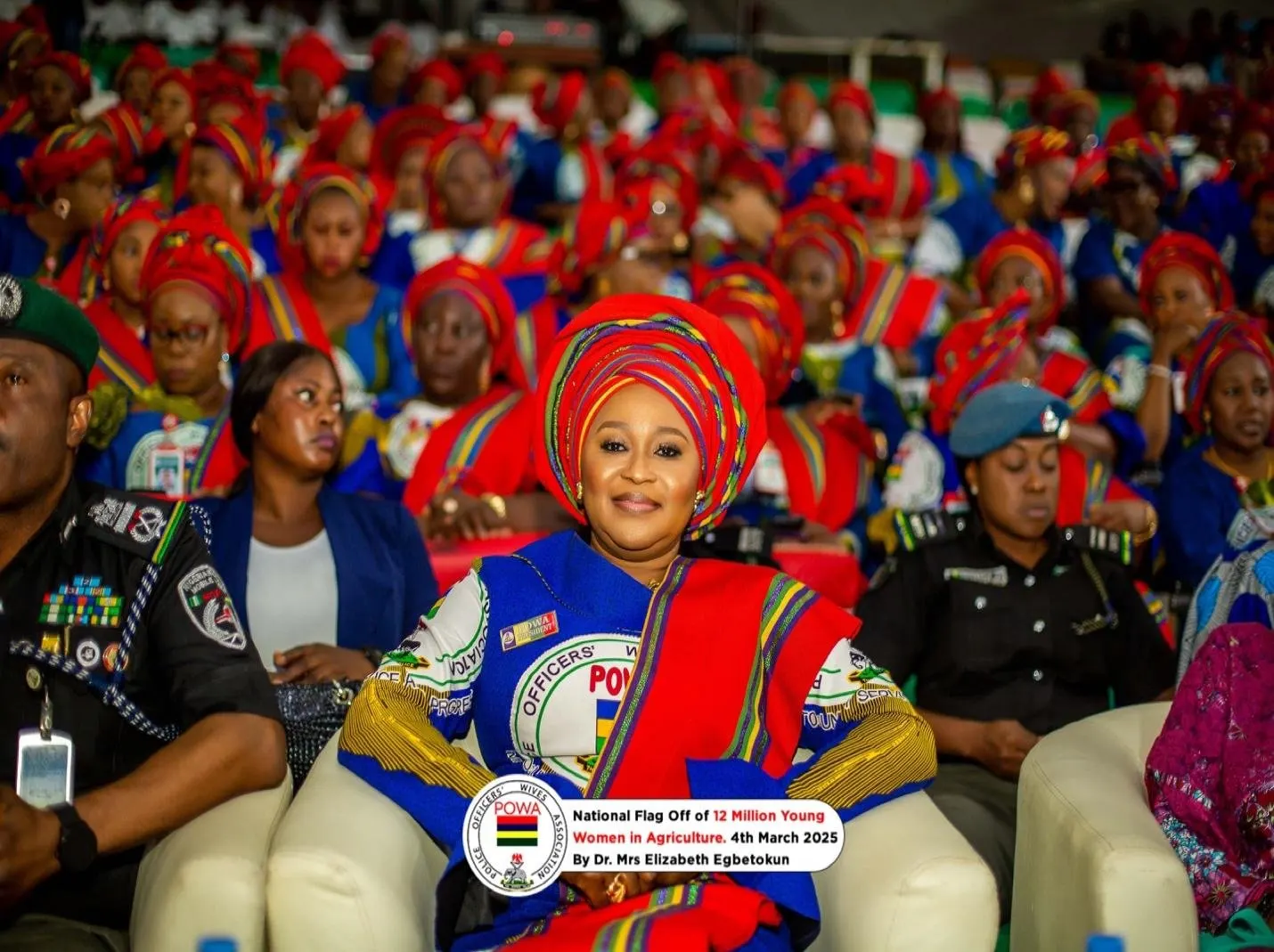
Nigeria Flags Off the UNESCO REF 12 Million Mobilisation Campaign for Young Women in Agriculture on International Women’s Day 2025
UNESCO REF Media Centre | Institutional Archives
At the Maryam Babangida National Centre for Women Development, global, national and community leadership converged to flag off a campaign to equip 12 million Nigerian women and youth in hydroponics and kenaf enterprise.
ABUJA, Nigeria, 4 March 2025. The National Flag-Off of the UNESCO REF 12 Million Mobilisation Campaign for Young Women in Agriculture (YWA) took place today at the Maryam Babangida National Centre for Women Development, Abuja, in commemoration of International Women’s Day 2025. The campaign, recognised as a National Empowerment Programme under the UNESCO REF Strategic Intervention Programme ALPHA (SIP-ALPHA), seeks to mobilise and equip 12 million Nigerian women and youth with skills in hydroponics and agro-kenaf enterprise development.
Global alignmentAlignement mondialThe global commitments this story advances. Open to see how.
- SDG2
SDG 2, Zero Hunger
ProvisionTarget 2.3: raise the productivity and incomes of small-scale food producers, in particular women
How the campaign respondsEquips women and youth for productive, climate-smart agriculture
- SDG5
SDG 5, Gender Equality
ProvisionTarget 5.a: equal rights to economic resources
How the campaign respondsPlaces agricultural enterprise at the centre of women’s economic empowerment
- SDG1
SDG 1, No Poverty
ProvisionTarget 1.2: reduce the proportion of people living in poverty
How the campaign respondsBuilds livelihoods through value-chain agribusiness
- SDG8
SDG 8, Decent Work and Economic Growth
ProvisionTarget 8.6: reduce youth not in employment, education or training
How the campaign respondsTrains and certifies young people for enterprise
- SDG16
SDG 16, Peace, Justice and Strong Institutions
ProvisionTarget 16.1: reduce violence
How the campaign respondsAdvances non-kinetic approaches to national security
- AU
African Union Agenda 2063
ProvisionAspiration 6: development driven by the potential of African women and youth
How the campaign respondsOffers a continental model of women-led food security
A global charge
Un appel mondial
In her keynote address, the United Nations Deputy Secretary-General, Amina J. Mohammed, framed the campaign as a contribution to the 2030 Agenda: “Every woman empowered is a community strengthened, every girl educated is a nation advanced. Nigeria’s 12 million Mobilisation Campaign is not just a national initiative; it is a global contribution to the 2030 Agenda.” She presented women’s empowerment not as charity but as strategy, the most effective pathway to peace and prosperity.
National commitments
Engagements nationaux
The Honourable Minister of Women Affairs, Hajia Imaan Sulaiman-Ibrahim, described YWA as a pillar of the Renewed Hope Agenda of President Bola Ahmed Tinubu: “When women are empowered, families are stronger, communities are safer, and nations are more prosperous. This campaign is a practical demonstration of our government’s resolve to ensure that women are not left behind but are leading the charge in building a secure and prosperous Nigeria.”
The Inspector-General of Police, Dr Kayode Adeolu Egbetokun, described the campaign as a non-kinetic approach to national security: “Food security is national security. When our women and youth are empowered to produce food, to create wealth, and to sustain their families, we are not only reducing hunger but also reducing crime, insecurity, and instability. A well-fed nation is a safer nation.”
Speaking for the Presidency, Barr. Yejide Ogundipe, Senior Special Assistant to the President on Food Security, declared: “Through my office, the Presidency will broker the financial support required to ensure that millions of Nigerians benefit from this National Empowerment Programme. Food security under the Renewed Hope Agenda is not merely policy, it is a covenant with the Nigerian people.”
Hon. Dr Asabe Vilita Bashir, Director-General of the Maryam Babangida National Centre for Women Development, confirmed the Centre as National Secretariat of YWA: “This is a performance mandate, not a ceremonial assignment. The Centre will ensure that every action taken under this programme translates into measurable impact for women, families, and communities across Nigeria.”
Science, accountability and the UNESCO family
Science, redevabilité et famille de l’UNESCO
The Institute of Agricultural Research and Training, Ibadan, represented through its leadership under Professor Veronica Obatolu, assured stakeholders of its role as the technical backbone of the programme: developing a practical training curriculum, upholding agronomic standards with a focus on climate-smart practice, and embedding research-driven innovation. “This initiative bridges research and practice,” the Institute affirmed.
Dr Lateef Olagunju, Secretary-General of the Nigerian National Commission for UNESCO, aligned the campaign with the values of UNESCO: “The Young Women in Agriculture initiative is a model of how UNESCO’s values, education, empowerment, and equity, can be translated into practical programmes that change lives. We call on donor agencies, development partners, and the private sector to join hands with us in scaling this vision.”
Leadership of the campaign
La conduite de la campagne
Dr Elizabeth Egbetokun, National President of POWA and National Advocate for YWA, traced the initiative from its launch in June 2023 and set out its scale: 12 million women, two million in each geopolitical zone, over 2024 to 2027 and extendable to 2030, with pioneer beneficiaries beginning training on 10 March 2025. She urged Nigerians at home and abroad to embrace the cause, and expressed gratitude to the First Lady, Senator Oluremi Tinubu, and to His Imperial Majesty, the Ooni of Ife, Oba Adeyeye Enitan Ogunwusi, Ojaja II.
The President of UNESCO REF and National Coordinator of YWA, Prince Abdulsalami Ladigbolu-Oranmiyan, set the campaign within Nigeria’s economic history: dependence on oil, the recession of 2016, low agricultural productivity, post-harvest losses and rising food imports. He identified four objectives: to diversify the economy; to strengthen the capacity of women and youth as a non-kinetic contribution to national security; to facilitate agribusiness investment, including to help beneficiaries meet their obligations under the national student loan scheme; and to break the cycle of poverty through value-chain agribusiness. “This flag-off represents more than a formal start,” he said. “It symbolises the strength, resilience, and determination of our women. It is a commitment to build a sustainable and inclusive agricultural sector.”
Prof. Hafsat Ganduje added that “the mobilisation of 12 million young women into agriculture is not just about food production, it is about dignity, opportunity, and security for families across Nigeria.”
Voices of beneficiaries
La parole des bénéficiaires
Beneficiaries spoke of the change already under way. “As a PhD holder, my life’s work has been dedicated to research and knowledge creation,” said Dr Egan Okon-Effiong. “Through the Young Women in Agriculture programme, I discovered that knowledge must also feed people.” Mrs Chidi Nzota, a Deputy Director in the Federal Ministry of Science and Technology, said the training and mentorship had given her practical skills in hydroponics and agribusiness that “have opened new doors”.
The flag-off bound together government, international institutions, academia, civil society, security agencies, traditional leadership and citizens in one shared mission. It is entered in the Institutional Archives of the UNESCO REF Media Centre; the full record of the day is published in the YWA Campaign Report.
■
Notes to editorsNotes aux rédactions
About Young Women in Agriculture. Young Women in Agriculture (YWA) is a national empowerment initiative of UNESCO REF under the Strategic Intervention Programme ALPHA (SIP-ALPHA). It seeks to mobilise 12 million young Nigerian women, two million from each geopolitical zone, into agriculture as producers, entrepreneurs and leaders. Read more on the YWA page.
About the Maryam Babangida National Centre for Women Development. The Centre serves as the National Secretariat of the Young Women in Agriculture initiative.
About UNESCO REF. The Read and Earn Federation for UNESCO (UNESCO REF) is a multidimensional and multisectoral development institution established in 2009 within the provisions of UNESCO, as authorised by the 13th Session of the UNESCO General Conference, Paris, 1964, and constituted through the National Commission for UNESCO, Nigeria. It works in education, culture, youth development and the advancement of the Sustainable Development Goals.
Media enquiries. UNESCO REF Media Centre, info@unescoref.org