
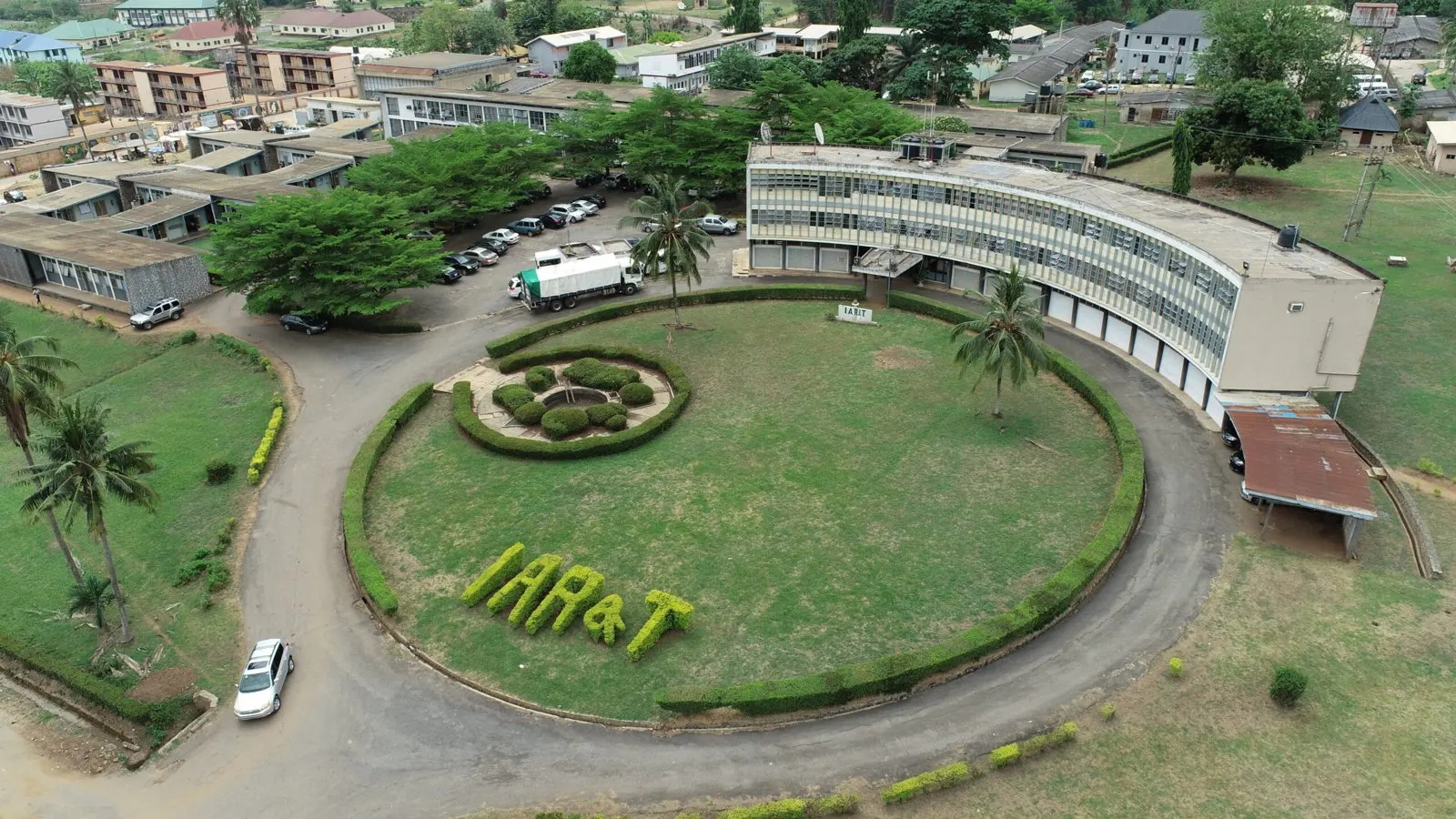
Headquarters of the Institute of Agricultural Research and Training, Moor Plantation, Ibadan

UNESCO REF, POWA and IAR&T Sign Memorandum of Understanding to Strengthen Research for Young Women in Agriculture

UNESCO REF, POWA and IAR&T Sign Memorandum of Understanding to Strengthen Research for Young Women in Agriculture

The DispatchUNESCO REF Media Centre · EISSN 3156-55574 min read

UNESCO REF Media Centre | Institutional Archives

A memorandum signed in Abuja joins the global vision of UNESCO REF, the nationwide reach of the Police Officers’ Wives Association and the scientific expertise of the Institute of Agricultural Research and Training in support of Young Women in Agriculture.

ABUJA, Nigeria, 16 July 2023. The Read and Earn Federation for UNESCO (UNESCO REF), the Police Officers’ Wives Association (POWA) and the Institute of Agricultural Research and Training (IAR&T), Obafemi Awolowo University, today signed a Memorandum of Understanding in Abuja to strengthen the Research and Development Unit of the Young Women in Agriculture (YWA) initiative. The signing was witnessed by the Inspector-General of Police, and attended by Dr Elizabeth Egbetokun, President of POWA, Professor Veronica Obatolu, Director of IAR&T, and Prince Abdulsalami Ladigbolu-Oranmiyan, President of UNESCO REF.

Global alignmentAlignement mondialThe global commitments this story advances. Open to see how.
  • SDG2

    SDG 2, Zero Hunger

    ProvisionTarget 2.a: increase investment in agricultural research and technology development

    How the agreement respondsBuilds a dedicated research and development unit for a national programme

  • SDG5

    SDG 5, Gender Equality

    ProvisionTarget 5.b: enhance the use of enabling technology to promote the empowerment of women

    How the agreement respondsBrings modern agricultural knowledge and technology to young women

  • SDG4

    SDG 4, Quality Education

    ProvisionTarget 4.4: increase the number of youth and adults with relevant skills

    How the agreement respondsTranslates research into practical training

  • SDG17

    SDG 17, Partnerships for the Goals

    ProvisionTarget 17.17: effective public and civil society partnerships

    How the agreement respondsJoins a research institute, a national association and UNESCO REF

The purpose of the Memorandum

L’objet du Mémorandum

The Memorandum establishes the institutional foundation for the Research and Development Unit of the Young Women in Agriculture initiative. It is designed to ensure that young women across Nigeria have access to current agricultural knowledge, modern farming technologies and evidence-based practice, and that the training, standards and technical guidance of the initiative rest on sound science.

The agreement brings together three complementary institutional capacities. UNESCO REF contributes programme leadership, strategic coordination and alignment with the Sustainable Development Goals. The Police Officers’ Wives Association contributes a permanent nationwide structure capable of mobilising women in every State of the Federation. The Institute of Agricultural Research and Training contributes the scientific expertise, field stations and research capacity of one of Nigeria’s foremost agricultural research institutions.

UNESCO REF regards this division of responsibility as a model for the delivery of national programmes: each partner contributes what it does best, within a common framework of accountability and a shared commitment to measurable results.

Research in the service of practice

La recherche au service de la pratique

Dr Elizabeth Egbetokun, President of POWA and National Advocate for Young Women in Agriculture, described the Memorandum as a landmark: “This MoU is a landmark step. By bringing together UNESCO REF’s global vision, POWA’s grassroots mobilisation, and IAR&T’s scientific expertise, we are building a foundation where research directly empowers practice. Our young women will not only farm, they will innovate, lead, and transform agriculture in Nigeria.”

Professor Veronica Obatolu, Director of IAR&T, reaffirmed the commitment of the Institute: “Our role is to ensure that research outcomes are not confined to laboratories but reach the fields where young women are working. This partnership will bridge the gap between science and society, creating a new generation of women farmers who are also knowledge-driven entrepreneurs.”

The statement of the Director goes to the heart of a long-standing challenge in agricultural development. The value of research is realised only when its findings are adopted by farmers. By placing the Institute at the centre of a national programme with nationwide reach, the Memorandum creates a direct channel from the laboratory and the field station to the farm.

A catalyst for delivery

Un catalyseur pour la mise en oeuvre

Speaking as National Coordinator of the initiative, the President of UNESCO REF, Prince Abdulsalami Ladigbolu-Oranmiyan, described the Memorandum as a catalyst for delivery: “In my role as National Coordinator, I stand at the heart of this initiative, uniting partners, driving momentum, and ensuring delivery. Our mission is to turn research into real-world solutions, to uphold accountability at every step, and to guarantee that innovation reaches the hands of young women across Nigeria. This is how we transform knowledge into power, and power into progress.”

Under the framework of the Memorandum, the Institute assumed responsibility for the scientific content of the initiative, including curriculum development, agronomic standards and the integration of climate-smart practice. It has since affirmed that responsibility at successive milestones of the initiative, including the National Flag-Off of the 12 Million Mobilisation Campaign on International Women’s Day 2025.

The Research and Development Unit

L’Unité de recherche et développement

The Research and Development Unit established under the Memorandum serves as the scientific conscience of the initiative. Its functions include the review of training content against current agronomic evidence; the adaptation of production techniques, including hydroponic and climate-smart methods, to the agro-ecological conditions of the different zones of the Federation; and the provision of technical guidance to trainers and beneficiaries. In this way the Unit helps to ensure that every young woman trained through the initiative receives instruction that is accurate, current and appropriate to Nigerian conditions.

Alignment with national and global commitments

Alignement sur les engagements nationaux et mondiaux

The partnership contributes directly to SDG 2, Zero Hunger, and SDG 5, Gender Equality, and supports the national response to the state of emergency on food security declared by the Federal Government in July 2023. It reflects the commitment of the UNESCO family to science in the service of society, and the recognition, shared across the 2030 Agenda, that agricultural research and the empowerment of women are among the most effective investments a nation can make in its food security.

An enduring institutional relationship

Une relation institutionnelle durable

The Memorandum marked the formal beginning of an enduring institutional relationship between UNESCO REF and the Institute of Agricultural Research and Training. That relationship was reaffirmed in January 2026, when the newly appointed Executive Director of the Institute pledged its continued support for the Young Women in Agriculture initiative.

This record is entered in the Institutional Archives of the UNESCO REF Media Centre.

■

Notes to editorsNotes aux rédactions

About Young Women in Agriculture. Young Women in Agriculture (YWA) is a national empowerment initiative of UNESCO REF under the Strategic Intervention Programme ALPHA (SIP-ALPHA). It seeks to mobilise 12 million young Nigerian women, two million from each geopolitical zone, into agriculture as producers, entrepreneurs and leaders. Read more on the YWA page.

About IAR&T. The Institute of Agricultural Research and Training, Moor Plantation, Ibadan, is a Nigerian agricultural research institute affiliated with Obafemi Awolowo University, Ile-Ife.

About POWA. The Police Officers’ Wives Association of Nigeria is a national association with a permanent structure across the Federation.

About UNESCO REF. The Read and Earn Federation for UNESCO (UNESCO REF) is a multidimensional and multisectoral development institution established in 2009 within the provisions of UNESCO, as authorised by the 13th Session of the UNESCO General Conference, Paris, 1964, and constituted through the National Commission for UNESCO, Nigeria. It works in education, culture, youth development and the advancement of the Sustainable Development Goals.

Media enquiries. UNESCO REF Media Centre, info@unescoref.org
SourcesSources
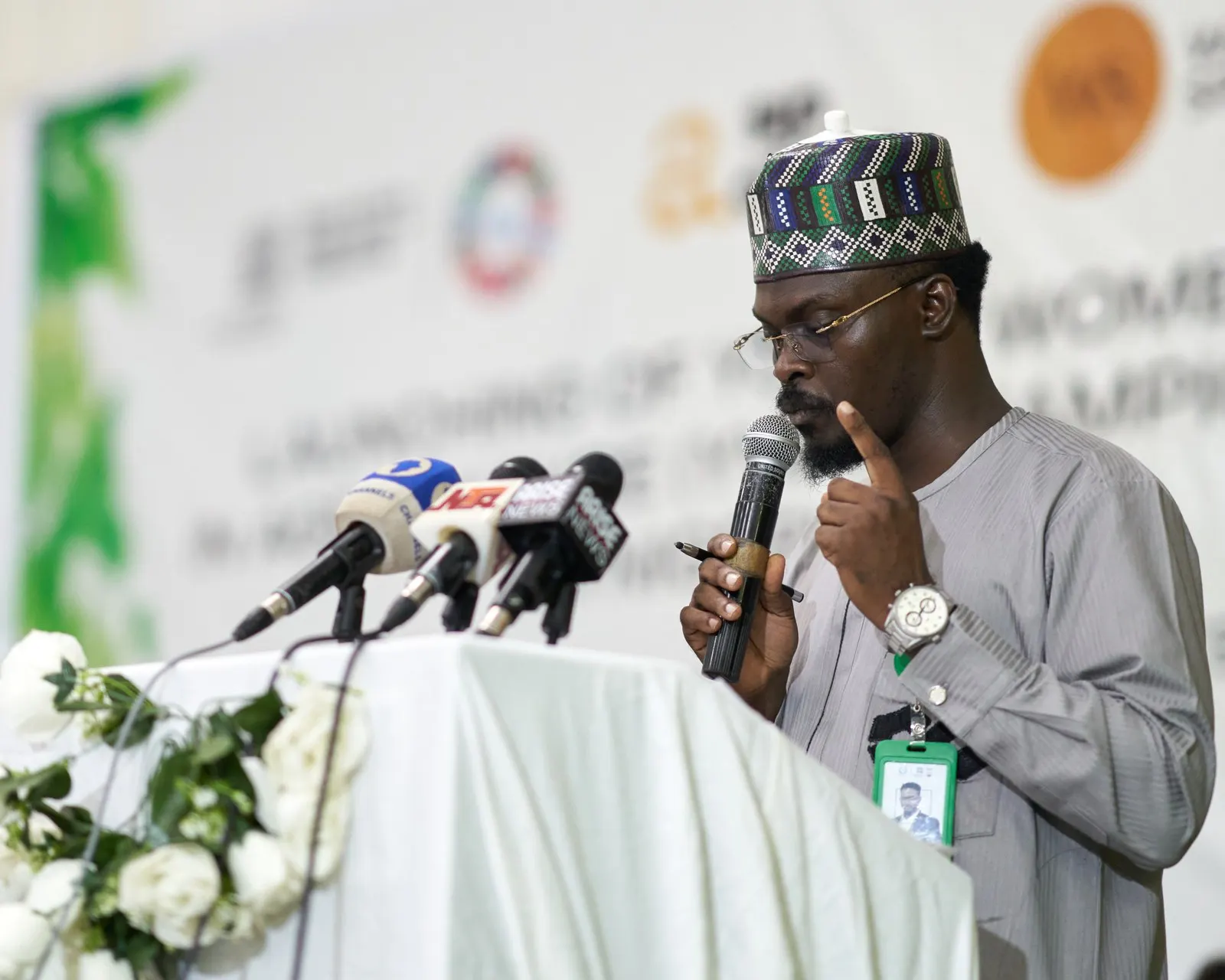
The President of UNESCO REF, Prince Abdulsalami Ladigbolu-Oranmiyan, addressing the launch of Young Women in Agriculture, Abuja

Seeds of Change: UNESCO REF Launches the Young Women in Agriculture Initiative

Seeds of Change: UNESCO REF Launches the Young Women in Agriculture Initiative

The DispatchUNESCO REF Media Centre · EISSN 3156-55575 min read

UNESCO REF Media Centre | Institutional Archives

In Abuja, leaders of government, international institutions, research and civil society witnessed the launch of a national initiative to bring 12 million young Nigerian women into agriculture.

ABUJA, Nigeria, 21 June 2023. The Read and Earn Federation for UNESCO (UNESCO REF) today launched the Young Women in Agriculture (YWA) initiative in Abuja. A flagship of the Strategic Intervention Programme ALPHA (SIP-ALPHA), the initiative was unveiled under the theme “Enhancing the Economic Value of Nigerian Women Through the Agricultural Value Chain”, before leaders drawn from government, international institutions, research and civil society.

Global alignmentAlignement mondialThe global commitments this story advances. Open to see how.
  • SDG2

    SDG 2, Zero Hunger

    ProvisionTarget 2.3: double the agricultural productivity and incomes of small-scale food producers, in particular women

    How the initiative respondsBrings young women into agriculture with training, technology and markets

  • SDG5

    SDG 5, Gender Equality

    ProvisionTarget 5.a: give women equal rights to economic resources

    How the initiative respondsPlaces agricultural enterprise within reach of young women in every zone

  • SDG8

    SDG 8, Decent Work and Economic Growth

    ProvisionTarget 8.6: reduce youth not in employment, education or training

    How the initiative respondsOpens agriculture as a profession and an enterprise

  • SDG17

    SDG 17, Partnerships for the Goals

    ProvisionTarget 17.17: effective public and civil society partnerships

    How the initiative respondsUnites government, research institutions and civil society behind one initiative

  • AU

    African Union Agenda 2063

    ProvisionAspiration 6: development driven by the potential of African women and youth

    How the initiative respondsInvests in young women as Africa’s next generation of food producers

A national instrument for stability and prosperity

Un instrument national pour la stabilité et la prospérité

The Young Women in Agriculture initiative was conceived by UNESCO REF as a national instrument for stability, prosperity and hope. It is anchored in the agricultural category of the Strategic Intervention Programme ALPHA, the framework through which the Federation designs and delivers its national interventions in alignment with the Sustainable Development Goals. Its purpose is to equip young Nigerian women to participate fully in agribusiness, agricultural technology, food processing and the allied sectors of the value chain, and to make agriculture a field of dignity, enterprise and leadership for a new generation.

The ambition of the initiative is national in scale and deliberate in its distribution: 12 million young women, two million from each of the six geopolitical zones of the Federation. This design reflects a principle that guides the work of UNESCO REF across its programmes, namely that development interventions of national consequence must reach every region of the country and must leave no community behind.

The launch took place at a decisive moment for national policy. Three weeks later, on 13 July 2023, the Federal Government declared a state of emergency on food security. UNESCO REF regards the launch of the initiative as part of the public deliberation that preceded that declaration, and the initiative has since been positioned as a direct and structured contribution to the national response.

The convergence of government, science and civil society

La convergence du gouvernement, de la science et de la société civile

The launch brought together, in one gathering, the institutions on which a national agricultural initiative depends: government, which sets policy and mobilises public resources; research institutions, which supply knowledge and standards; international and diaspora partners, which bring experience and networks; and civil society, which reaches communities. That convergence was itself a statement of institutional intent, signalling that the empowerment of young women in agriculture is a matter of national policy and public accountability.

Chief Audu Ogbeh, former Minister of Agriculture and Rural Development, set the tone of the proceedings: “This initiative is timely and visionary. Agriculture remains the backbone of our economy, and empowering young women to take leadership in this sector is not only about food security, but about national renewal.”

Chief Ogbeh, who was present in the hall throughout the launch, addressed the young women directly and urged them to begin without delay: “In agriculture, invent your future. Start something at home now. By the time you are growing up, you will find that that thing is a reliable source of income, especially if it has to do with food. There will never be too much of it, and the time to start is now.”

Channels Television report on the launch of the Young Women in Agriculture initiative in Abuja, 21 June 2023, with remarks by Chief Audu Ogbeh and the President of UNESCO REF.

Princess Adejoke Orelope-Adefulire, Senior Special Assistant to the President on the Sustainable Development Goals, was also in attendance. She spoke on the goals of the initiative and its place in the national effort to attain the Sustainable Development Goals, and described the launch as another frontier that enhances the existing collaboration between UNESCO REF and her Office.

Dr Lateef Olagunju, Secretary-General of the Nigerian National Commission for UNESCO, situated the initiative within the international commitments to which the Federation subscribes: “The Young Women in Agriculture Initiative reflects UNESCO’s commitment to inclusive and sustainable development. By embedding this programme within the SIP-ALPHA framework, we are ensuring that it is measurable, accountable, and aligned with the Sustainable Development Goals and the Africa 2063 Agenda.”

Speaking for Women Space, United States, its Chairperson observed that “women everywhere are the custodians of resilience”, and that pathways for young Nigerian women in agriculture strengthen families, communities and the nation as a whole.

Partners in delivery

Les partenaires de la mise en oeuvre

Dr Elizabeth Egbetokun, President of the Police Officers’ Wives Association (POWA), pledged the reach of her association’s permanent nationwide structure: “With our permanent nationwide structure, we will ensure that no community is left behind. This is about giving young women the tools, the training, and the confidence to transform agriculture into a platform for dignity and prosperity.”

Hon. Dr Asabe Vilita Bashir, Director-General of the Maryam Babangida National Centre for Women Development, linked the initiative to the statutory mandate of the Centre: “This initiative speaks directly to the pillars of transformation, training, research, and gender advocacy. By equipping young women with the skills, resources, and opportunities to thrive in agriculture, we are not only addressing food security but ensuring that women become productive, self-reliant, and central to national prosperity.”

The Institute of Agricultural Research and Training (IAR&T), Ibadan, affirmed its readiness to support the initiative through curriculum development, field training and the integration of agricultural technology. “Agriculture today is not what it was yesterday,” the Institute’s leadership observed. “Climate change, soil degradation, and shifting market dynamics demand new solutions. The Young Women in Agriculture Initiative is powerful because it does not just mobilise, it educates. Our laboratories, our field stations, and our experts are ready to serve. Because when young women thrive in agriculture, Nigeria thrives.”

The charge of the President of UNESCO REF

L’appel du Président de l’UNESCO REF

The President of UNESCO REF, Prince Abdulsalami Ladigbolu-Oranmiyan, described the launch as the beginning of a national movement: “The launch of the Young Women in Agriculture Initiative is more than a programme; it is the birth of a movement. A movement that recognises the strength of our diaspora, the resilience of our women, and the urgency of food security. Together, we are planting seeds of hope, unity, and transformation for Nigeria and Africa.”

The President underlined that the initiative would be judged by its results: by the number of young women who acquire productive skills, by the enterprises they establish, by the food they bring to market and by the communities they strengthen. UNESCO REF accordingly committed the initiative to the disciplines of measurement, accountability and partnership that characterise its work within the provisions of UNESCO.

Institutional significance

Portée institutionnelle

The launch opened a multi-year national mobilisation designed to build sustainable agricultural value chains, to strengthen national food security and to align the development of the Federation with the 2030 Agenda for Sustainable Development and the African Union’s Agenda 2063. In the years that followed, the initiative secured the support of the Federal Ministry of Women Affairs, the Office of the Senior Special Assistant to the President on Food Security, State Governments and national research institutions, and was flagged off as a National Empowerment Programme on International Women’s Day 2025.

This record is entered in the Institutional Archives of the UNESCO REF Media Centre as the founding moment of the Young Women in Agriculture initiative. The launch highlights may be viewed on YouTube.

■

Notes to editorsNotes aux rédactions

About Young Women in Agriculture. Young Women in Agriculture (YWA) is a national empowerment initiative of UNESCO REF under the Strategic Intervention Programme ALPHA (SIP-ALPHA). It seeks to mobilise 12 million young Nigerian women, two million from each geopolitical zone, into agriculture as producers, entrepreneurs and leaders. Read more on the YWA page.

About UNESCO REF. The Read and Earn Federation for UNESCO (UNESCO REF) is a multidimensional and multisectoral development institution established in 2009 within the provisions of UNESCO, as authorised by the 13th Session of the UNESCO General Conference, Paris, 1964, and constituted through the National Commission for UNESCO, Nigeria. It works in education, culture, youth development and the advancement of the Sustainable Development Goals.

Media enquiries. UNESCO REF Media Centre, info@unescoref.org

SourcesSources
Keystone Bank

Keystone Bank Partners with UNESCO REF to Deliver Bespoke Financial Solutions for Programme Beneficiaries

Keystone Bank Partners with UNESCO REF to Deliver Bespoke Financial Solutions for Programme Beneficiaries

The DispatchUNESCO REF Media Centre · EISSN 3156-55574 min read

UNESCO REF Media Centre | Institutional Archives

A strategic collaboration matches UNESCO REF’s empowerment programmes with financial products designed around the realities of their beneficiaries.

ABUJA, Nigeria, 17 July 2022. Keystone Bank Nigeria and the Read and Earn Federation for UNESCO (UNESCO REF) have entered into a strategic collaboration under which the Bank will design and deliver financial products and services tailored to the beneficiaries of UNESCO REF programmes, so that the skills and opportunities those programmes create are matched with sustainable access to finance.

Global alignmentAlignement mondialThe global commitments this story advances. Open to see how.
  • SDG8

    SDG 8, Decent Work and Economic Growth

    ProvisionTarget 8.10: expand access to banking and financial services for all

    How the collaboration respondsDesigns financial products around programme beneficiaries

  • SDG1

    SDG 1, No Poverty

    ProvisionTarget 1.4: equal rights to economic resources, including financial services

    How the collaboration respondsExtends financial access to women and young people

  • SDG17

    SDG 17, Partnerships for the Goals

    ProvisionTarget 17.17: effective public, private and civil society partnerships

    How the collaboration respondsJoins a commercial bank with a development institution

Finance as a partner in empowerment

La finance au service de l’autonomisation

UNESCO REF has long recognised that skills and training, however excellent, do not of themselves sustain a livelihood. Those who complete a programme of empowerment must be able to save, to transact, to access credit and to build the financial history on which enterprises grow. The collaboration with Keystone Bank responds to that need by placing a commercial bank alongside the Federation’s programmes, with products designed for the circumstances of their beneficiaries.

Beneficiaries of The August Project (TAP), the UNESCO REF programme of personal reinvention and transformation for young Nigerians, are among the first to benefit. Many of them are new entrepreneurs, young professionals in transition or women re-entering economic life, whose needs are poorly served by standard banking products.

The statement of the President of UNESCO REF

La déclaration du Président de l’UNESCO REF

The President of UNESCO REF, Prince Abdulsalami Ladigbolu-Oranmiyan, described the collaboration as a bridge between vision and opportunity: “This collaboration with Keystone Bank is not just about banking, it is about building bridges between vision and opportunity. By creating bespoke financial products, Keystone Bank ensures that the transformation we ignite through our programmes is matched with the tools to sustain it. This is how empowerment becomes lasting, and how communities move from hope to achievement.”

The design of the collaboration

La conception de la collaboration

Under the collaboration, Keystone Bank undertakes to design and deliver financial products and services tailored to the needs of the beneficiaries of UNESCO REF programmes. These include accounts and savings arrangements suited to modest and irregular incomes, transaction services that enable new enterprises to operate within the formal economy, and access to financial guidance that equips beneficiaries to manage their resources with confidence.

UNESCO REF, for its part, identifies and prepares the beneficiaries of its programmes, coordinates their engagement with the Bank and integrates financial literacy into its training. The arrangement allows each institution to remain within its competence while combining their strengths in the service of a common objective: empowerment that endures beyond the classroom.

The collaboration also offers a practical answer to a persistent gap in the Nigerian development landscape, where training programmes and financial institutions too often operate in isolation. By connecting them deliberately, UNESCO REF and Keystone Bank seek to shorten the distance between acquiring a skill and building a livelihood.

The commitment of Keystone Bank

L’engagement de Keystone Bank

A senior executive of Keystone Bank reaffirmed the Bank’s commitment to inclusive growth: “At Keystone Bank, we believe finance should be a partner in progress. Partnering with UNESCO REF allows us to extend our reach to women, youth, and communities who are ready to reinvent themselves. By tailoring products to their realities, we are not only supporting personal transformation but also contributing to national prosperity.”

The commitment reflects a growing recognition within the Nigerian financial sector that inclusive finance is both a social responsibility and a sound commercial strategy. Young people and women represent a large and dynamic share of the national economy, and institutions that serve them well contribute to the stability and growth of the whole.

Financial inclusion and national development

Inclusion financière et développement national

Financial inclusion has become a recognised priority of national economic policy in Nigeria, and the inclusion of women and young people is central to it. The collaboration between UNESCO REF and Keystone Bank contributes to that objective in a focused and practical way, by connecting a defined population of programme beneficiaries with products designed for them and by supporting their transition into the formal financial system.

A model of development-oriented banking

Un modèle de finance orientée vers le développement

The collaboration brings together three complementary capacities: the programme design and coordination of UNESCO REF; the financial expertise, products and reach of Keystone Bank; and the grassroots mobilisation of the Police Officers’ Wives Association through its permanent nationwide structure. Together they offer a model of development-oriented banking in which financial services are designed around the beneficiaries of social programmes, rather than the reverse.

UNESCO REF regards partnerships of this kind as essential to the sustainability of its work. They extend the impact of each programme beyond its period of training, embed beneficiaries within the formal economy and create the conditions for enterprises to grow, employ others and contribute to national prosperity.

Alignment with the Sustainable Development Goals

Alignement sur les objectifs de développement durable

The collaboration contributes to SDG 8, Decent Work and Economic Growth, and in particular to Target 8.10 on expanding access to banking and financial services for all; to SDG 1, No Poverty, through equal rights to economic resources, including financial services; and to SDG 17, through partnership between the public, private and civil society sectors. It is consistent with the commitment of UNESCO REF to empowerment that is practical, measurable and lasting.

This record is entered in the Institutional Archives of the UNESCO REF Media Centre.

■

Notes to editorsNotes aux rédactions

About The August Project. The August Project (TAP) is a UNESCO REF youth capacity-building programme of personal reinvention and transformation.

About UNESCO REF. The Read and Earn Federation for UNESCO (UNESCO REF) is a multidimensional and multisectoral development institution established in 2009 within the provisions of UNESCO, as authorised by the 13th Session of the UNESCO General Conference, Paris, 1964, and constituted through the National Commission for UNESCO, Nigeria. It works in education, culture, youth development and the advancement of the Sustainable Development Goals.

Media enquiries. UNESCO REF Media Centre, info@unescoref.org

SourcesSources

UNESCO Opens Global Course on AI and the Rule of Law

Outside SourceUNESCO REF Media Centre · EISSN 3156-55574 min read

UNESCO REF Media Centre | Outside Source

UNESCO Opens Global Online Course on Artificial Intelligence and the Rule of Law

Developed with The Future Society and leading judicial and technical partners, the course equips judges, lawyers and judicial operators worldwide to navigate the opportunities and the risks of artificial intelligence in justice systems.

PARIS, France. Judicial systems worldwide are increasingly adopting artificial intelligence (AI) to support legal practitioners in identifying precedents, to streamline judicial processes, and to assist judges in decisions related to sentencing and recidivism. While these applications hold promise for efficiency and innovation, they also raise profound implications for human rights, particularly where the opacity of AI systems may challenge the principles of open justice, due process and the rule of law.

Global alignmentAlignement mondialThe global commitments this story advances. Open to see how.

The course responds to international commitments on justice, human rights and the ethical governance of technology.

  • SDG16

    SDG 16, Peace, Justice and Strong Institutions (primary)

    ProvisionTarget 16.3: the rule of law and equal access to justice for all

    How the course respondsPrepares judicial operators to use AI without weakening due process

  • SDG4

    SDG 4, Quality Education

    ProvisionTarget 4.4: relevant skills for decent work

    How the course respondsFree, multilingual professional learning

  • SDG9

    SDG 9, Industry, Innovation and Infrastructure

    ProvisionResponsible innovation

    How the course respondsResponsible adoption of AI in public institutions

  • UDHR

    Universal Declaration of Human Rights

    ProvisionArticle 10: a fair and public hearing by an independent and impartial tribunal

    How the course respondsPlaces open justice at the centre of AI adoption

A global training initiative

Une initiative mondiale de formation

To strengthen capacity in this critical area, UNESCO, in partnership with The Future Society (TFS), has launched a joint online training programme on Artificial Intelligence and the Rule of Law. The course was formally introduced on 6 December 2021 at The Athens Roundtable, the premier international multi-stakeholder forum on AI, legal systems, regulatory compliance and governance.

Voices of the partners

La parole aux partenaires

Marielza Oliveira, Director in the Communication and Information Sector of UNESCO, emphasised that the societal and human rights impacts of AI demand collective action.

“The online course on AI and the Rule of Law is an effort in this direction, with 21 speakers from 14 countries sharing their unique knowledge and experience.”

Marielza Oliveira, Director, Communication and Information Sector, UNESCO

Nicolas Miailhe, President and Founder of The Future Society, highlighted the strategic importance of the programme.

“The course aims to build capacity across judicial stakeholders worldwide so they can be better equipped to navigate AI’s opportunities as well as manage the risks. This is crucial for the responsible adoption of AI.”

Nicolas Miailhe, President and Founder, The Future Society

Benes Aldana, President of the National Judicial College of the United States, underlined the urgency of early engagement.

“The legitimacy of judicial decisions in democratic societies depends on public acceptance of their fairness. It is important for the judiciary to begin early on to build capacity to deal with these rapidly evolving technologies. The Massive Open Online Course (MOOC) is a valuable resource in training judicial operators globally.”

Benes Aldana, President, National Judicial College, United States

Structure of the course

Structure du cours

Developed in collaboration with Cetic.br and NIC.br, the National Judicial College (NJC) and IEEE SA, the course engages participants in a timely global dialogue on the application of AI in justice systems. Structured around six introductory modules, it explores:

  • Why AI matters for justice.
  • How AI can be responsibly adopted within judicial systems worldwide.
  • What AI means for human rights.
  • The evolving role of judicial operators in the age of AI.

Access and certification

Accès et certification

The programme is offered in English, French, Spanish, Russian, Chinese, Arabic and Portuguese, ensuring broad accessibility. Hosted by the National Judicial College, the course commenced on 14 March 2022 and runs for six weeks, after which it remains available online for self-directed learning. Participants who complete all six modules receive a Certificate of Course Completion.

The initiative is supported by the Open Society Foundations and the UNESCO Multi-Donor Programme on Freedom of Expression and Safety of Journalists (MDP), underscoring a shared commitment to advancing judicial capacity, safeguarding human rights and ensuring the responsible integration of AI into justice systems worldwide.

ENDS

Notes to editorsNotes aux rédactions

About this story. This story reports an announcement made by UNESCO. The UNESCO REF Media Centre carries it in its Outside Source section for the information of its readers. It reflects the position of its original publisher and does not represent the position of UNESCO REF.

About UNESCO REF. The Read and Earn Federation for UNESCO (UNESCO REF) is a multidimensional and multisectoral development institution, established in 2009 under the UNESCO Provisions Framework in Nigeria. It works to strengthen human and institutional capacity across Nigeria and Africa through education, research and professional development, in alignment with the 2030 Agenda for Sustainable Development.

Media enquiries. UNESCO REF Media Centre, info@unescoref.org

SourcesSources

UNESCO Designates Eight New Global Geoparks

Outside SourceUNESCO REF Media Centre · EISSN 3156-55572 min read

UNESCO REF Media Centre | Outside Source

UNESCO Expands the Global Geoparks Network with Eight New Designations

The UNESCO Executive Board has designated eight new UNESCO Global Geoparks, bringing the Network to 177 sites in 46 countries, with Luxembourg and Sweden joining for the first time.

PARIS, France, 8 September 2021. The UNESCO Executive Board has approved the designation of eight new UNESCO Global Geoparks, bringing the total number of sites in the Global Geoparks Network to 177 across 46 countries. With this expansion, Luxembourg and Sweden join the Network for the first time, entering the global community of geoparks.

Global alignmentAlignement mondialThe global commitments this story advances. Open to see how.

UNESCO Global Geoparks join the conservation of the Earth’s heritage to education and local sustainable development.

  • SDG15

    SDG 15, Life on Land (primary)

    ProvisionConservation of terrestrial ecosystems and natural heritage

    How geoparks respondProtect geological heritage of international significance

  • SDG11

    SDG 11, Sustainable Cities and Communities

    ProvisionTarget 11.4: protect the world’s cultural and natural heritage

    How geoparks respondJoin heritage to the life of local communities

  • SDG4

    SDG 4, Quality Education

    ProvisionEducation for sustainable development

    How geoparks respondPublic education in the Earth sciences

  • SDG8

    SDG 8, Decent Work

    ProvisionSustainable tourism that creates jobs

    How geoparks respondLocal empowerment through sustainable tourism

A label of international significance

Un label d’importance internationale

The UNESCO Global Geopark label, unanimously ratified by Member States in 2015, recognises geological heritage of international significance. These sites display an extraordinary geological diversity that underpins the biological and cultural richness of their regions.

By combining the conservation of unique geological heritage with public education and sustainable development, geoparks serve as catalysts for the empowerment of local communities and for global knowledge exchange.

A network the size of a nation

Un réseau à l’échelle d’une nation

With the latest designations, the Network now covers a surface area of 370,662 square kilometres, comparable to the size of Japan, reinforcing its role as a truly global initiative.

The new designations

Les nouvelles désignations

This year’s designations include two geoparks in Latin America and six in Europe. While COVID-19 restrictions prevented the evaluation of new applications from Asia, Africa and the Arab region, several projects are under way to extend the Network into these regions in the near future.

ENDS

Notes to editorsNotes aux rédactions

About this story. This story reports an announcement made by UNESCO. The UNESCO REF Media Centre carries it in its Outside Source section for the information of its readers. It reflects the position of its original publisher and does not represent the position of UNESCO REF.

About UNESCO REF. The Read and Earn Federation for UNESCO (UNESCO REF) is a multidimensional and multisectoral development institution, established in 2009 under the UNESCO Provisions Framework in Nigeria. It works to strengthen human and institutional capacity across Nigeria and Africa through education, research and professional development, in alignment with the 2030 Agenda for Sustainable Development.

Media enquiries. UNESCO REF Media Centre, info@unescoref.org

SourcesSources